
How to Map a Customer Journey and Decide What to Fix First


Pick one customer, one goal and a clear ending before mapping the whole experience. For example, follow a first-time shopper from comparing shipping options through receiving their order. Use the Customer Journey Map PowerPoint template to compare stages, capture evidence and decide where to act.
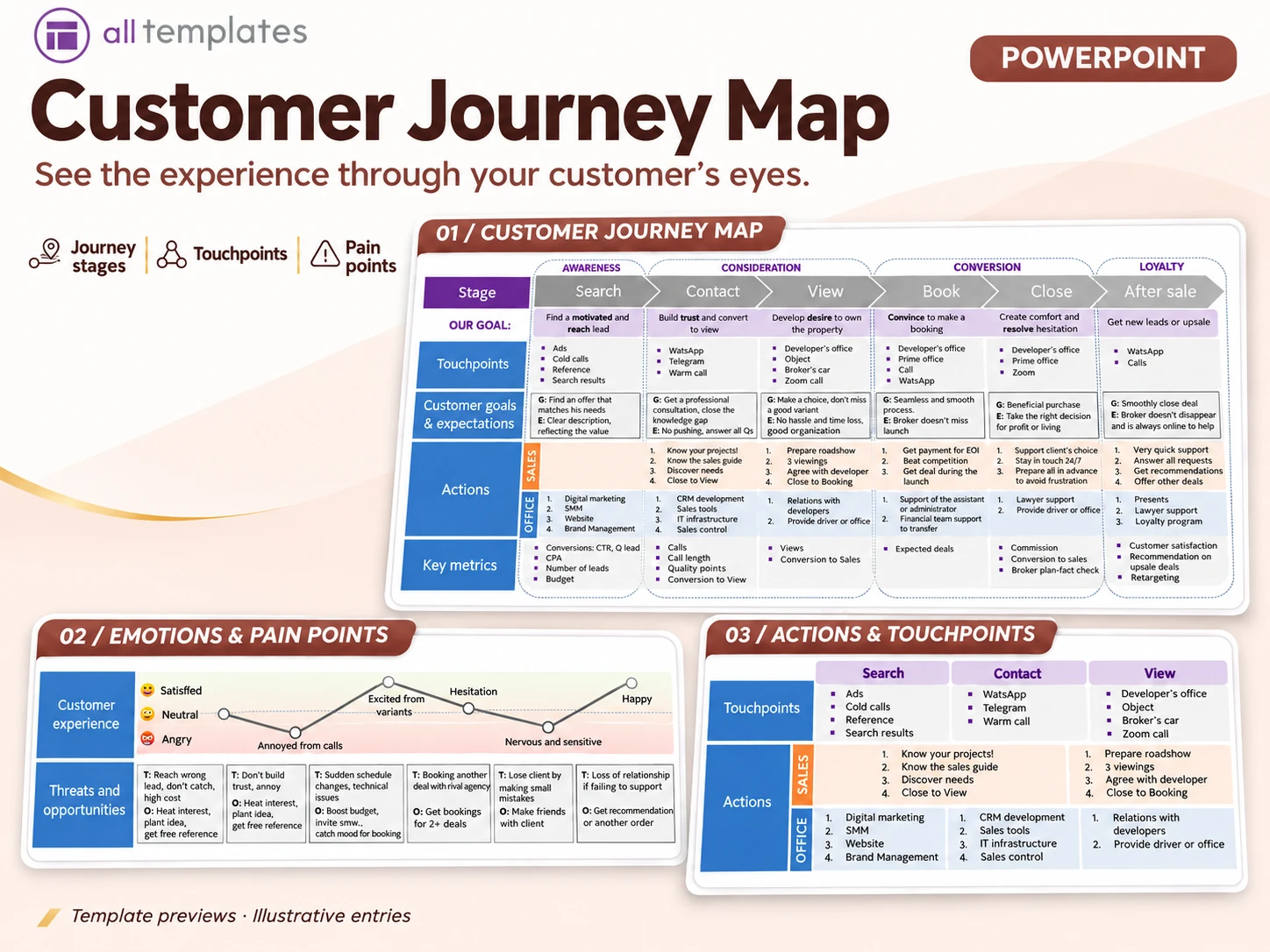
Collect evidence from both sides of the handoff
Ask customers what they expected, what they did and where they needed help. Compare those accounts with the messages they saw and records such as support tickets, delivery notices or checkout exits. Capture the source and date beside each observation. If one shopper recalls an issue, treat it as a lead. If support logs show the same question repeatedly, estimate how often it happens before prioritising it. Read the steps in the GOV.UK experience mapping guide.
Translate a pain point into a test
In this fictional shop, interviews point to uncertainty over delivery timing. The team finds that checkout shows an estimate but shipping confirmations omit it. Put both touchpoints on the map. An email change may be faster to test than a redesign. Compare delivery-status contacts per 100 orders for similar orders, and keep an eye on whether the published estimate matches actual delivery dates.
| Stage | Evidence to collect | Decision it informs |
|---|---|---|
| Consideration | Questions on delivery cost and timing | Which terms to surface on the item page |
| Purchase | Customer accounts of what they expected at checkout | Whether the delivery estimate is understood |
| Delivery | Contact reasons and promised vs. actual arrival | Whether the confirmation or the estimate needs work |
| Retention | Follow-up interviews and returns reasons | What should change for repeat orders |
Review the map with the people who can change the service
Ask each team to identify the step it owns and one change it can test. Score candidate fixes by frequency, impact on customers, confidence in the evidence and effort. A frequent low-cost change may go first. A rare issue that blocks payment or leaves someone without recourse can still deserve urgent attention. Write the measure and review date next to the chosen experiment.
Keep a dated copy of the current journey and sketch the proposed experience separately. Revisit the map after the experiment and update the evidence. Open the editable PowerPoint journey map to run the review with your team.
wow, there’s a lot of work put into that doc